


When I set out to plan my revisited series, I knew I had a whisky that needed to be on that list- Longrow Peated. I originally scored it a seven, then dropped it to six. I tasted it blind and thought it was from Islay. If there ever was a whisky that confounded me in my early steps, this was it. So today it is time to go ahead and review Longrow Peated again.
It also is an opportunity to serve as an opener for a mini series of reviews all centred around peat outside of Islay. While Springbank does not declare openly where it sources its peat, I got some insider info during one of my visits to the distillery from the guide accompanying us that day, who shared that the peat used is all from mainland Scotland. This aligns with some of the info I was able to find online, which sometimes mentions wet peat from Bogbain Farm near Inverness and dry peat from St Fergus Moss near Peterhead (Distilling Wisdom, Whiskydrinks).
The changing score and a slice of humble pie
In my original review, I had scored Longrow Peated a strong 7/10, very good stuff. I was definitely a bit star-struck. This was the first Springbank I had managed to get my hands on, and the easiest to find. That’s something that remains true to this day – you don’t need to look hard to find some Longrow Peated available from online stores. The Springbank hype probably got the best of me on that occasion.
And then I ran an entry-level peated malt blind tasting (one of my very few videos), and surprisingly mixed up Longrow and Ardbeg’s young Wee Beastie. Not my best blind tasting moment. For two separate reasons: first of all, because I was convinced Longrow was clearly superior to the Wee Beastie, something that the blind flipped. But mostly because I was convinced it would be extremely easy to distinguish mainland and Islay peat. And I couldn’t.
Like many others, I had convinced myself I could distinguish the two because of what I had read about the aromatic differences that come from the material in their makeup: trees and heather for mainland peat, coastal bog for Islay. Easy to recognise, right? Not so much.
And then there is the final reason for this revisited review. My taste has changed. I used to love peated whisky – the stronger the better. But more and more I find myself enjoying peat as a seasoning, something great in small amounts but a bit too overpowering when it takes over, unless I am really in the mood for it.
Which all boils down to one thing: time to revisit that Longrow Peated, check that score… and see if I would get it wrong again!
The blind
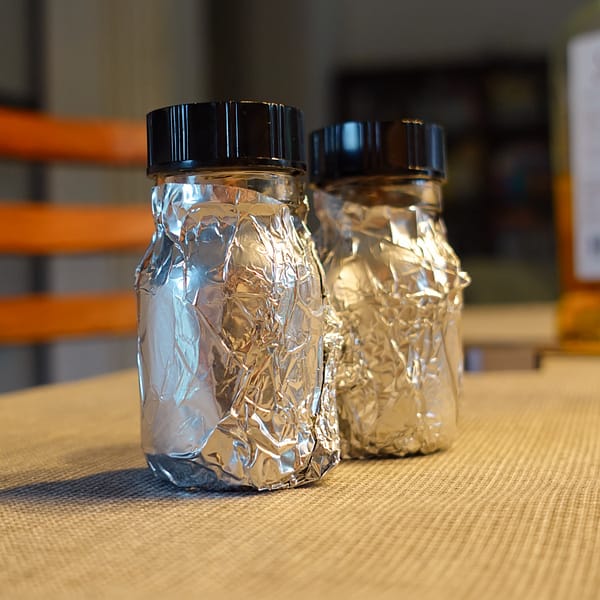
Over two years down the line, I want to put myself to the test again and see if my palate has improved or if those theoretical differences really aren’t as strong. So I asked my lovely wife to prepare blind samples, which is what my tasting notes for today’s review will be based on, including my guess.
For the sake of clarity, I will call the samples Sample A and B, review their nose first, then their palate, and finally give my guess and scores before the big reveal. The two bottles tasted are the exact same as the ones I reviewed in 2024 – they have been open but protected from light and heat, and both have a fill level about halfway down the bottle. They have certainly evolved since 2024, both under the same conditions.
Nose
Sample A: The core notes are malty, sweet, funky and peaty. There is a strong grain-driven aroma to start: barley tea, malt chaff, quickly followed by sweet vanilla syrup, ripe apples, with a touch of lemon zest. Then funk, linseed oil and grease, and finally some peat, evident but not prominent, reminiscent of charred wood.
Sample B: When contrasting A and B, there is one immediate difference, which is the presence of a much stronger sherry cask influence which really jumps from the glass as raisins and baking spices. It is also significantly more maritime, with brine and a touch of seaweed. Besides these notes, the core is fruity, peaty and spicy. Ripe apples and pear dusted with vanilla sugar, beach bonfire peat and some peppery spice.
Palate and Finish
Sample A: Lovely texture, even though it comes across as slightly hot and young. The youthful theme continues with notes of pear schnapps, which are very evident on a backdrop of malt notes, vanilla, ripe apples, workshop funk and some gingery spice. The finish is medium-long with a slightly astringent end. Intriguing but a bit too linear for my taste.
Sample B: not as velvety as sample A, the texture is definitely leaner. The taste is also simpler than the nose: white fruit, maritime peat (significantly stronger than in A), raisins, pepper and ginger spice and a slight seashore funk, like decomposing seaweed. The finish is medium, sweet, peaty and spicy.
Score and my guess
Sample A: The industrial funk and the texture are the giveaways for me, and they scream Springbank, so I guess this is Longrow. The peat’s second-fiddle role, on the other hand, makes it more difficult to recognise as mainland peat. Or maybe I am just finding an excuse for that old blind tasting mix-up. The vote stays at 6. It is a good whisky, but a simple one.
Sample B: The stronger maritime and peat note point towards Islay and Ardbeg here, so I’ll guess Wee Beastie. The stronger Sherry note could have gone either way – interesting to notice but ultimately irrelevant in the decision. The peat, on the other hand, is recognisable as Islay and the real tell: maritime, iodine-rich and phenolic. No score, but I suspect spending more time with this might make me reconsider the original 6.5.
The big reveal!
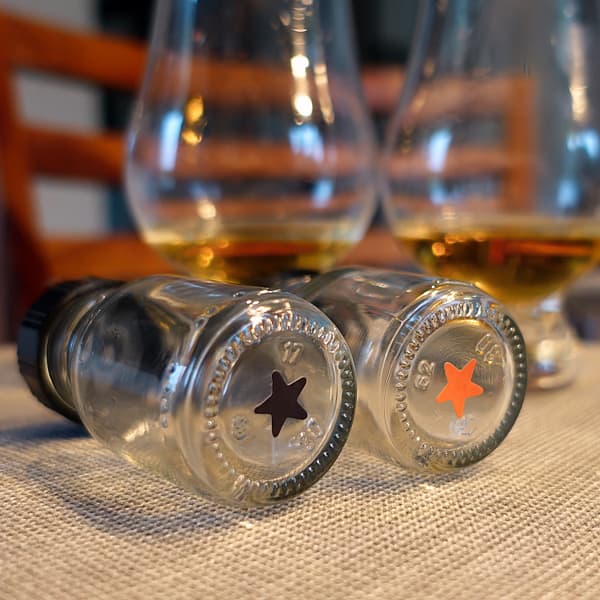
Did I get it right this time? After revealing the two samples, I only saw the coloured stickers at the bottom… so I had to ask my wife, who confirmed that… I got them right this time around! Picking between two samples rather than the original eight is certainly easier, even with luck, but I feel I recognised the right clues this time. It seems that maybe my palate improved in these two years after all.
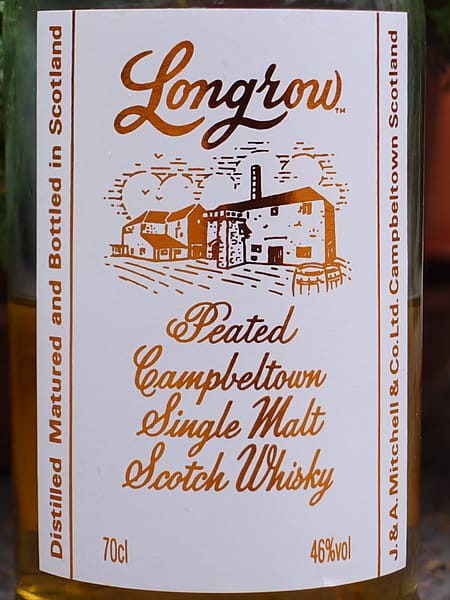
Longrow Peated Campbeltown Single Malt
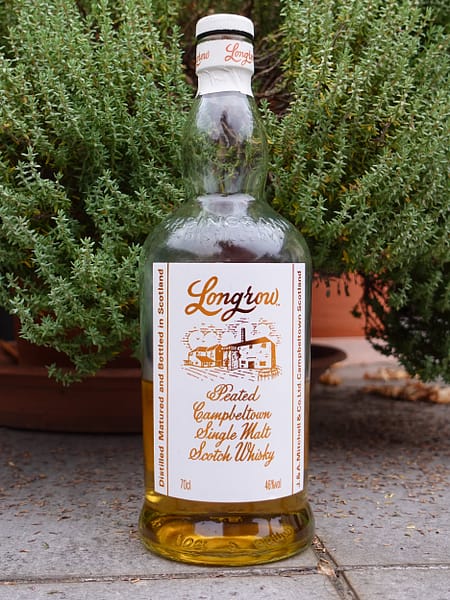
TL:DR: Springbank’s easiest-to-find bottle delivers texture over complexity
Score: 6/10
Specs
Price paid: €59.75
Bottled date: 1/7/2022
ABV: 46%
Natural colour: Yes, even if it isn’t clearly stated on the bottle
Non-chill filtered: Yes
Casks Used: Bourbon and Sherry
The reason behind the score, and would I buy it again?
I already revealed that the score hasn’t moved. It stays a 6, as it did over two years ago. But the reasons have. Back in 2024, I dropped the score because Longrow showed its youth in the blind tasting. Nowadays I am a lot more comfortable with young whiskies: if youth is accompanied by structure, complexity and aromatic richness, it can come together to provide a great drinking experience.
And that’s where Longrow gets an “almost there” even while still showing its youth in today’s tasting. The texture, as with most Springbanks, is unrivalled. Rich, mouthcoating and oily. But the complexity and aromas don’t keep up. They are pleasantly simple, but a bit monotone and linear. As with many Springbank products, my preference for Longrow is turning more and more to the older, teen-aged Longrow expressions as the sweet spot in terms of drinking experience.
Would I buy it again?
My answer today is different from what it was in 2024. I can still easily find Longrow at €55 or thereabouts, which until recently was the lowest price for a Springbank product on the European market. The next cheapest, excluding the Campbeltown Loch Blend, was Springbank 10 priced back then around the €70-90 market price. But now the Springbank 100 proof is starting to come down to prices around €55-65 and even Springbank 10 can be occasionally seen at around €65: at those prices I would grab the Springer 100 or 10 over the Longrow every day.
A sneak peek to next week
What should you expect next? Another peated whisky that doesn’t declare its peat source but almost certainly uses mainland peat. One I haven’t reviewed before, and one I have been dying to review for a while: the Cù Bòcan 15-year-old.
Expect some thoughts on mild peat and sherry… and maybe some aesthetic notes for once. That bottle has one of the most divisive looks in the world of Scotch. See you then!
If you have enjoyed this content, please share a comment below and consider supporting the cost of this blog via the button below


