


Over the past couple of years of writing Road to Dram, my tastes have undoubtedly evolved. And while I might look for cask strength and IB bottles when I reach for a dram to relax with, I continue to have a soft spot for entry-level drams. It’s probably because they provide a way to get friends and family to have a taste of what I am passionate about. More often than not, this means looking at Scottish distilleries. There is, however, a pair of Japanese whiskies that are high on many drinkers’ lists of suggestions for entry-level whisky. A pair I reviewed previously and I am revisiting today: Nikka’s Miyagikyo and Yoichi single malts.
Both of Nikka’s entry level single malts have a strong fan base. It comes up regularly in discussions about Japanese whisky. And, surprisingly, both original reviews are among the most read articles on this blog. And that is saying much – my focus is unapologetically on Scottish whisky. Japanese whisky is something I love to learn about (mostly thanks to the great resource of Kanpai planet). But I am certainly not the port of call for that category of whisky. And yet, month in and month out, the interest is solid and persistent.
The quality is there…
All that to say, that I had not gone back to these two Japanese bottles in some time, but once my curiosity was tickled, I knew I wanted Yoichi and Miyagikyo to be the focus of my second Revisited series article. Unlike my usual style, today’s reviews are left at the end of the post (but you can jump straight there, if you can’t wait) – but I will spoil the conclusion here as the revisited review itself noticeably shaped what this article is about: value.
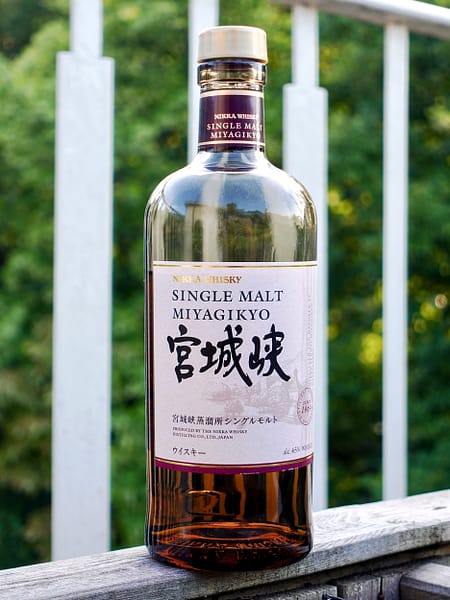
Tasting both today, there is no huge change compared to the past. In my original review of Miyagikyo, I applauded its elegant style. Today, I still love the complex, elegant nose, but I am slightly less enthusiastic about its taste, especially how short-lasting it is. But even with those niggles, it remains a good and solid whisky. My original Yoichi piece is probably closer to my thoughts today, though I don’t find the excessive sweetness I mentioned in that first review anymore. It remains a gently peated, very likeable drinker.
The quality is exactly what you would want to find in an entry level single malt. Likeable, approachable and easy to sip. So great bottles to buy for a beginner, right?
… The price remains misguided
Not so fast. The quality is there; the price is not. At €70 a bottle, the same for both, these are expensive entry-level, no-age-statement whiskies. And it gets harder to defend when you look at the age-stated versions. Nikka axed its aged Yoichi and Miyagikyo lines back in 2015, replacing them with these NAS bottlings, which reached Europe in 2016. The age statements have since trickled back as limited releases: Yoichi 10 in 2022, Miyagikyo 10 only in 2025, landing here in 2026. Both now sell for €130-140.
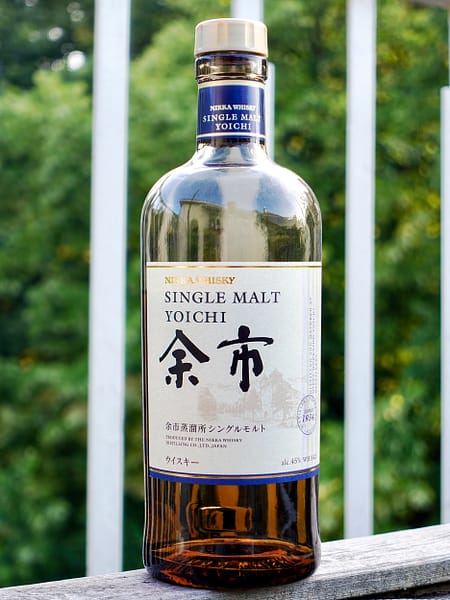
Here is the part that gives me pause. The Miyagikyo 10 carries a Japanese list price of around ¥12,000, call it €75. By the time it reaches a European shelf, it has nearly doubled. And the usual explanations don’t hold up. It isn’t import duty: Scotch and Japanese whisky face the same excise and VAT here, so tax can’t account for the gap. What it comes down to is allocation. The big Japanese producers, Nikka and Suntory between them make most of the country’s whisky, serve the domestic market and duty-free first, and ration what is left to export markets. The liquid exists. The price reflects where you sit in the queue, not what it costs to make.
Where the single malt market is today
So what does €70 actually buy you elsewhere? This is where Yoichi and Miyagikyo start to look exposed, and the spec sheets tell the story before the liquid does. Both are bottled at 45%, caramel-coloured and chill-filtered. Looking at what sits beside them at the same money, the integrity bottled, higher ABV, even full cask strength, options are abundant. You are paying an entry-level premium for the more processed, mass-market presentation.
On the peated side, €70 puts Yoichi head to head with Port Charlotte 10 — age-stated, properly complex, a punchy 50%, and in some markets (Germany among them) cheaper still. If you want something more maritime and less smoky, Ardnamurchan Cask Strength is there too. Higher ABV, natural presentation, and one of the best core releases of the Scottish new wave. I won’t even open the Springbank 10 file, given the patchy availability and the gouging… though I did pay €65 for my last bottle.
Miyagikyo is trickier, and the trickiness cuts against it. Its closest stylistic cousins, gentle, fruity malts like Glencadam 10 or Deanston 12, are simply cheaper, so the like-for-like it already loses on price. Which pushes it into the ring with the bold flavour crowd instead, and that is where it really struggles. Aberlour A’bunadh is the obvious one: also no-age-statement, but cask strength and the original sherry bomb. The two could not be further apart in temperament. One whispers, the other shouts, and only the one who whispers is charging a premium for the privilege. The shared NAS label closes off the easy defence, too: no one can tell me the Nikka must be cheaper to make for carrying no age statement when A’bunadh, equally ageless, delivers several times the character for the same money.
Even the limited editions undercut Yoichi and Miyagikyo. Bruichladdich’s recent Old Skool, a 10-year-old at 50%, with full natural presentation, landed in European shops at around €70. It is already selling through, with secondary prices creeping up, so the window is closing, but the point stands. A one-off special release can match a standing Nikka NAS on price and walk straight past it on substance.
Score is irrespective of price – eagerness to buy is
These revisited reviews settled something I had been turning over for a long time: how much price should shape a score. My answer, for now, is that it shouldn’t. A score is my read on quality: how complex a whisky is, how well it hangs together, how truly it speaks for its distillery. Price belongs on its own axis. It doesn’t move the number, but it absolutely moves the decision to buy.
Which is why I’m bringing back something my reviews used to carry: a plain verdict on whether a bottle is worth your money. You’ll see it under both Miyagikyo and Yoichi below. And you’ll see a good whisky earn a “don’t buy,” because the quality is real and the price still isn’t. (Whether price should ever sit inside a score, and what a score ought to measure in the first place, is a bigger argument for another day.)
The reviews
Nikka Miyagikyo Single Malt
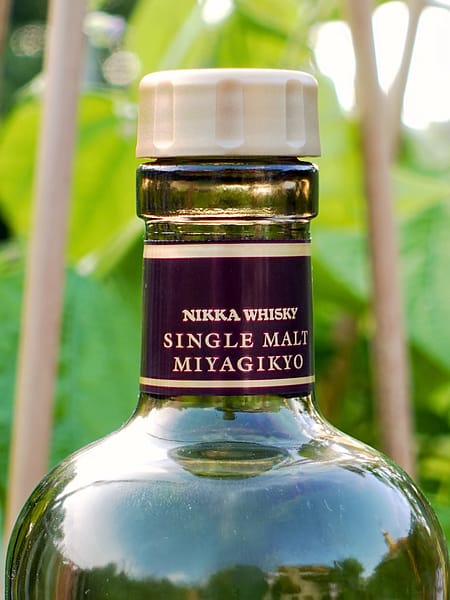
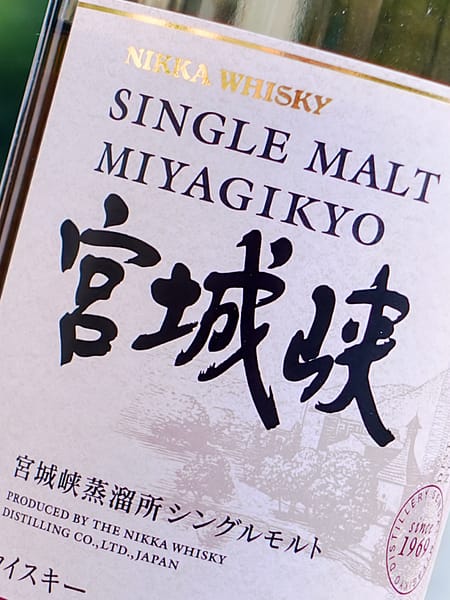
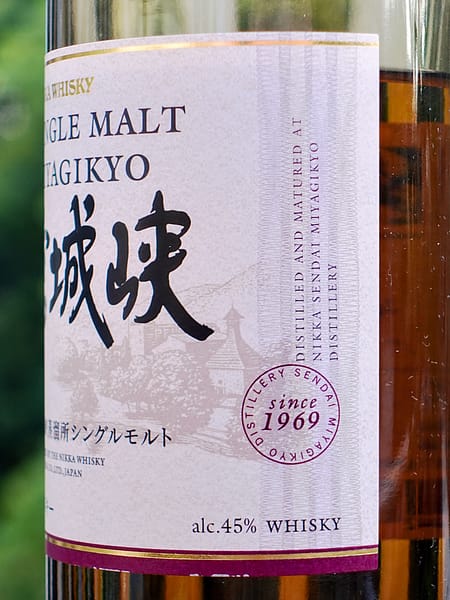
Specs
Price paid: €59.90 (on offer, current prices sit around €70)
Lot: 6/14C361505
ABV: 45%
Natural colour: No
Non-chill filtered: No
Casks Used: mostly ex-Sherry, with some ex-Bourbon
Tasting Notes
No colour notes – when caramel colouring is employed, it makes no sense.
Nose: It starts very mellow, floral and fruity, with a gentle sweetness and balancing citrus freshness. White fruit, apples, pears, then bananas and a little honeydew melon, and floral notes, white flowers, honeysuckle and a little elderflower. Then light caramel and dried lemon rind. As it opens up, it becomes very malt-forward, with some slight roasted notes, a little spice and aniseed and a hint of honey. It loses a bit of shine the longer it stays open, with dried grass notes slowly taking over.
Taste & finish: The texture starts oily but quickly turns thin. The Sherry influence is more noticeable than on the nose, even if the malt dominates. It opens on grain-forward notes, malted barley grist, malted biscuits, then golden syrup, lemon peel (candied rather than dry), a grassy taste and then a gentle touch of Sherry baking spice and some raisin notes. But everything is fleeting and vanishes quickly, leaving your palate chasing ghosts. The finish is quite short, malty and grassy, with a touch of sweetness and citrus.
Score: 6, a bit of a mixed bag: lovely nose, but as is often the case with entry-level core releases the palate is significantly less interesting.
Would I buy it again? No – at this price point there is better value elsewhere
Nikka Yoichi Single Malt
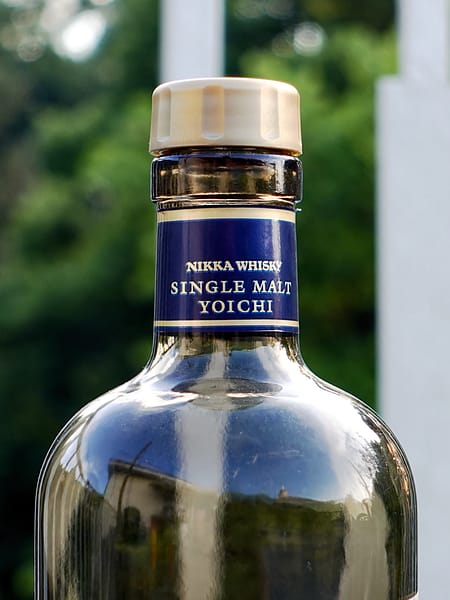
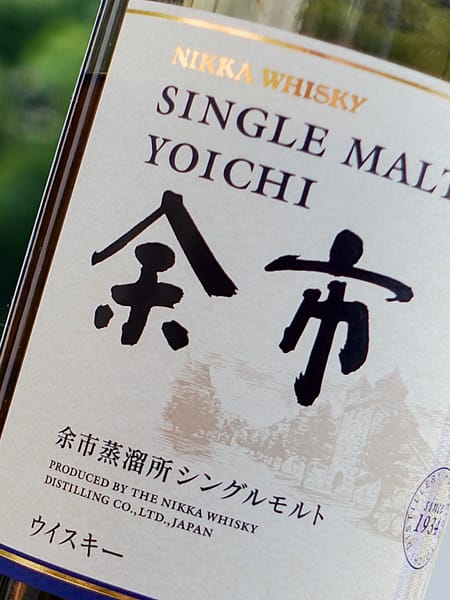
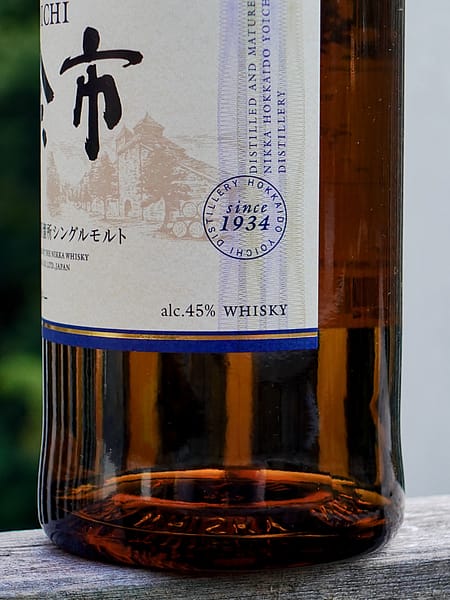
Specs
Price paid: €59.90 (on special offer, as the Miyagikyo, this goes usually for around €70)
Lot: 6/140281517
ABV: 45%
Natural colour: No
Non-chill filtered: No
Casks Used: Not stated but widely reported to be a mix of ex-Bourbon, ex-Sherry, re-charred and new American oak.
Tasting Notes
As for the Miyagikyo, no point in commenting on colour when caramel is used.
Nose: I struggled to get proper peat on this one in my original review, but I get it today, though very downplayed: mild creosote and woodsmoke. There is banana, apple, lemon, some sea spray and grassy notes… and that’s pretty much it. It’s pleasant, intense, but quite monotone and simple.
Taste & finish: There’s a stigma in whisky geek circles against using the word smooth, but that’s exactly what this is. Yes, there is peat and some brine but they are, as on the nose, very well mannered. It is still quite simple, malty, slightly peaty with a white fruit, caramel, slightly saline and citrus core. But the notes don’t evolve or open up, they sit there still until they fade away after a while. The finish is short to medium, sweet, maritime and the peat makes its appearance as a slight bitterness at the end
Score: 6, It is simple and enjoyable, a solid entry-level dram
Would I buy it again? No – at this price point there is better value elsewhere, just like its sibling.
If you have enjoyed this content, please share a comment below and consider supporting the cost of this blog via the button below


Neither of these names rang a bell for me. A quick search revealed the obvious reason: they are priced in Australia against whiskies such as Ardnamurchan cask strength, Dalmore 12, GlenAllachie 12, Glengoyne cask strength, Redbreast 12 and Kilkerran Heavily Peated. They are significantly more expensive than Amrut Fusion, Johnnie Walker 15 Green Label, Loch Lomond 14, Green Spot Irish and any number of 10-12 year-old Scotch whiskies. Most Australians would pass right by them without looking.
In other words you’d have to be a dedicated fan to buy either of them in preference to so many alternatives that cost the same or less. Your excellent review makes one wonder who those buyers are.
Thanks for bringing an Australian pricing perspective, Ken. When I make comments about pricing in my market (the Euro zone) I am always afraid that they might miss the mark elsewhere – reassuring to hear that is not the case here, although a shame that the pricing structure is the same for you.
As for who likes these whiskies, I suspect there are fans of Japanese whisky styles to whom these speak a lot more than for me (and judging by your picks as comparators, I suspect for you too). I also think there are a lot of drinkers who have been in the game longer than me and originally got to know these two single malts when they were priced much more competitively – they know these are overpriced today, but there is a sentimental attachment.