


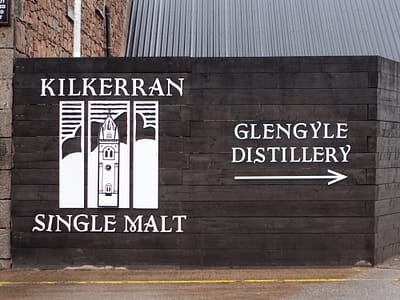
The day of my Campbeltown visit, after the Cadenhead Blending Workshop, was focused on Kilkerran, in particular the warehouse tasting. The walk from my hotel to the distillery had almost a ritualistic nature. Walking first past Springbank’s distillery shop and the Washback bar brought a strong sense of familiarity.
The moment I crossed the gate dividing Glengyle (Kilkerran’s distillery – if you need a refresher on why the two have different names, check this post) from Springbank, I felt something warm. I have a real soft spot for Glengyle; it is probably my favourite distillery, even more than Springbank. So no visit to the Wee Toon would be complete for me without stopping by.
I started with a distillery visit in the morning, followed by the warehouse tasting in the afternoon. I won’t go on the distillery tour today except to note how different it is compared to its famous sibling, Springbank. Springbank always comes across as a distillery which evolved organically, jumbled, with a production flow driven by its history.
Kilkerran is linear. You can follow the production from grain to spirit in a single line, essentially – it is efficient and minimalist. Personally, I feel this difference is also reflected in the spirit styles. That might just be me trying to fit my convictions into a nicely fitting story. Nonetheless, it was a thought that accompanied me as I made my way to the warehouse tasting in the afternoon.
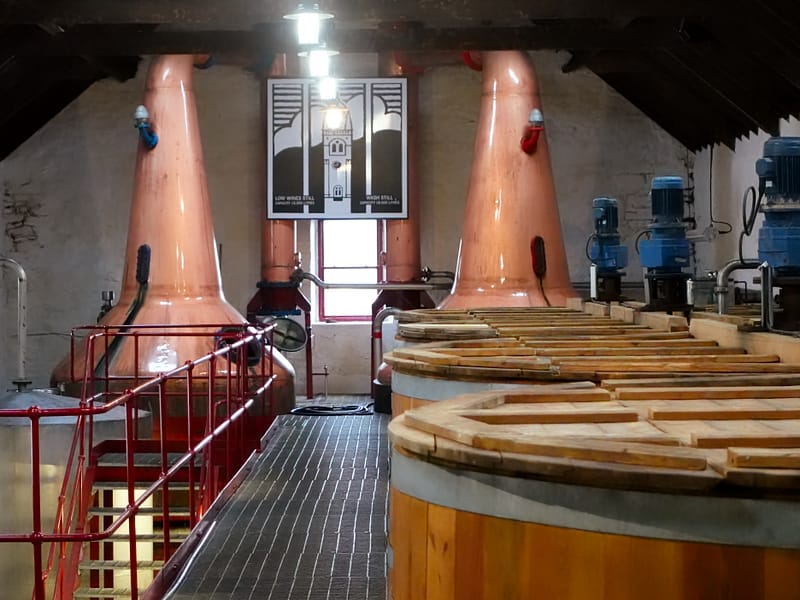
An intro to the Kilkerran Warehouse Tasting
You might be reading this post because you are travelling to Campbeltown and are considering the Kilkerran Warehouse Tasting as one of the whisky activities to book. If that is the case, a quick overview might be helpful.
The Kilkerran Warehouse tasting provides the chance to try six separate single casks from the distillery, ranging across the spectrum of the distillery’s output in age and style. It is a unique opportunity to sample Glengyle’s production at the source. Attending the tasting also allows you to buy any of the casks you tried, something not all warehouse tastings allow (I am looking at you, Glen Scotia). Each participant can buy one (and no more than one) half-bottle (350ml) of any of the casks tasted.
As a Kilkerran fan, this tasting is a must whenever I am in Campbeltown. I had already signed up for the tasting in 2025, so I was curious to see how the two lineups would compare, a year apart. Before we even started, the tasting had an extra treat in store for me. The person leading the tasting was my friend Ali. As the lone South American, or Peruvian to be exact, working at Springbank and Kilkerran, he is easily recognised, but that’s just the surface. He is a passionate whisky enthusiast, which, together with his warm personality, makes him a great host. I knew I was going to be in good hands.
Last year’s hero….
As soon as I got my hand on the card with the casks we would be tasting, I got a bit giddy. A few of the casks were of the same make as the ones I tried last year. A 2006 triple-distilled Kilkerran (which I ended up taking home last year), a 2005 ex-Bourbon and a heavily peated 2015 were all in the lineup again. Same distillation run, but different cask. That in itself is an intriguing perspective: being able to try sister casks a year apart can really bring home how batch-dependent whisky is. Will it be better with an extra year, or has it already reached its peak?

Yet even more, I was excited by one of the casks on the list, which had changed from 2025: a 2013 fully matured in a Port pipe. It immediately brought me back to one of the standout casks from last year’s tasting – a 2013 Kilkerran, matured in Port until 2020 and then refilled in an ex-Bourbon cask. The lovely nose of Bakewell tart, spices and caramel with Kilkerran’s typical fermentative funk is still bright in my head. I had bought a bottle during my previous visit, but if I could have, I would have been happy to take a couple of back-ups with me. No chance, as the one-bottle-per-cask-per-customer policy is strictly enforced. So I was hoping to find something similar in this year’s Port pipe-aged version.
…is this year’s villain?
The tasting started with the always-impressive triple-distilled Kilkerran, which will hopefully make it to an official release at some point, and continued in that vein until cask four, the Port pipe. I raised the glencairn to my nose expectantly. It was very fruity -with cherry, strawberry and raspberry – and then very little else. Maybe my nose was a bit fatigued after four days of whisky shenanigans. I sipped it, and all I got was liquid jam. No doubt about it, the cask had completely taken over the spirit.
Everything I love about Kilkerran, the elegant take on Campbeltown funk, the bright fruit, the light maritime character, had disappeared. By the end of the tasting, this one was firmly my least liked cask of the day. All hopes of a backup for last year’s standout were dashed.
Cask by cask, year by year
It may seem odd: I almost felt happy about the disappointment. Yet it is refreshing. I have never been a dogmatist. And I have never believed in “perfect execution”, especially not in whisky. Cask after cask, whisky is a gamble even when the people gambling are good at it. And the folk at Glengyle are so without any doubt. Even with the same cask type, same distillery, same year of spirit, you can get two completely different outcomes.
Side by side, the lesson is hard to miss. Both 2013 Kilkerran. Both started ageing in Port pipes. But last year’s cask spent only its first seven years in the Port pipe before being moved to ex-Bourbon for the rest of its life, while this year’s sat in Port for the full term. Seven years of Port enhanced the spirit: the Bakewell tart, the spice, the caramel laid over Kilkerran’s fermentative funk, the wood flattering the distillate rather than burying it. The full term did the opposite. The Port kept giving, until there was nothing of Glengyle left to taste — just that wall of jammy fruit. Same distillery, same vintage, same cask type. The only variable that mattered was when someone decided to stop.
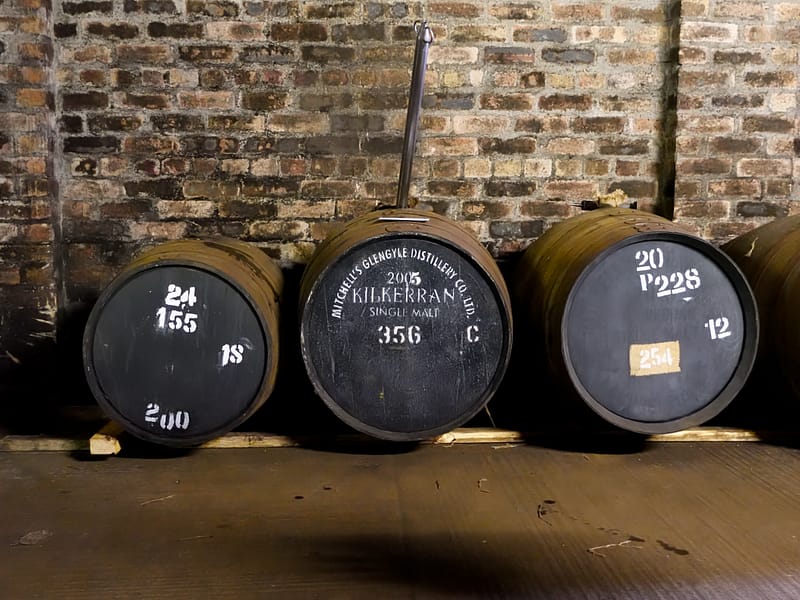
As often with bets, you win some, and you lose some. Deciding to stop the Port ageing after 7 years in the cask instead of leaving the spirit to age for its full term proved to be the smarter bet to take.
The counterpoint
The port cask was the most on the nose of the differences I picked up during the Kilkerran warehouse tasting, but there were other, more subtle differences too. The 2006 triple distilled, elegant, and almost delicate, missed some of the fresh zesty citrus notes that had blown me away the previous year. Conversely, the heavily peated 2015 was the cask which impressed me most this time around. And the only one I took with me back home this time.
Kilkerran’s heavily peated style has never been my favourite among the distillery’s output. Often, the peat ends up overpowering the elegant spirit. When I tried that 2015 last year, it was good, but not great – the peat was still a bit raw. A year later, the peat has become part of the whole rather than the odd element. What a difference a year makes.
These differences, these ups and downs, rather than disappointments, feel like honesty. Honesty shown in a way that only comes across in single casks. An official bottling, blended, calibrated to reproduce a house style, will never be. Which makes me want to go back and try the 12-year-old again, and revisit it with this fresh new perspective in mind: I’ll see you next week for that.
Did the tasting change how I feel about Kilkerran?
I started this post admitting my soft spot for Glengyle. Did this year’s Kilkerran warehouse tasting change that? The way I see it, it is a bit like a romantic relationship. It’s easy to feel attracted to someone you meet on a night out, at their best: cleaned up, dressed for the occasion and with a focus to impress. But that’s not what makes relationships last. It’s waking up together, dishevelled and groggy, and still feeling a warm attraction for each other. If you run for the hills once the masks come down, then it was not meant to be.
So, did my opinion of Kilkerran change? Not at all. I like it even more, warts and all.
If you have enjoyed this content, please share a comment below and consider supporting the cost of this blog via the button below