



It’s a few days after the Independent Spirits Festival. I am sitting in Cadenhead’s blending lab in Campbeltown, taking part in their eponymous workshop. In front of me, a syringe doubling as a pipette, a measuring cylinder, and 8 blind whisky samples in test tubes. I have just finished sampling them individually. I jotted down my notes on each. Now, the fun of creating my own blend, the whole reason for this workshop, is supposed to begin.
Instead, I feel overwhelmed. Not by the measuring or calculations. I have played with blending before. Where to start? Too many choices and too little time to think about them. I should have thought of a strategy beforehand rather than coming in with a blank slate, and yet, by approaching this as a complete fool, I learned something. And I had a lot of fun doing so.
The workshop
Cadenhead’s themselves need little introduction – if you do, you might want to check this old post of mine. Cadenhead’s Blending Workshop takes place twice a day every Monday-Saturday in Campbeltown, in a dedicated space attached to their shop. Depending on the time of year, it can get pretty crowded, so it’s best to book ahead online. (Cadenhead’s does not sponsor me, this is just public service info.)
During the 90-minute session, you get to sample 8 whiskies selected by the Cadenhead’s staff blind and then use them to create your blend, which you will take home. At £100 (2026 price), it could be considered expensive, but is fair for a blind tasting plus blending session and a 700 ml bottle to take home.

One thing should be said. If you book the session thinking you will learn the craft of blending, you may be disappointed – but frankly, you shouldn’t be surprised. You will get some useful tips on blending from the staff, but it takes years of practice to master. Instead, I learned something about whisky drinkers, first and foremost myself.
Why play matters
As whisky drinkers, it is easy to treat whisky as a finished product, detached from the work that goes into getting to that point. Ultimately, we all taste and declare a verdict. It might be a score, for the whisky geeks among us, or just expressing a like or dislike for a newbie. But that keeps us blind to the play that got that liquid into the bottle.
Spend a little time visiting distilleries, and you find out quickly how much those who make whisky play with it. They might call it experimenting, but ultimately it is the same thing. They try new things, fail, try something else, improve on it and finally get to a concept which gets bottled and sold. Some distilleries, like Glasgow 1770, even have microdistillation labs to carry out mini experiments which can be scaled up if successful. I would love to have my microdistillation home lab, but it is stupidly illegal in many countries, including my own. So the closest thing to experimenting and playing we get is blending.
I have spent the last two and a half years reviewing whisky, so should I really care about what happens before the whisky lands in the glass? If I start casting doubts on the scoring part of the whole exercise, am I recanting on two and a half years of posts here on Road to Dram? My review and my score, from day one, have been a tool to help me discover whisky and understand it better as a drink. Playing with blending bridges the gap with the craft side of making whisky. Without playing and experimenting ourselves, can we really appreciate the craft needed to bring us our favourite bottles? Understand what is needed to pick each component so they play into a harmonious melody?
The instruments and the orchestra
Let’s pick up from my moment of overwhelm: where should I head for my blend? 90 minutes might seem long, but it ticks away quickly during Cadenhead’s Blending Workshop. So I thought about when I would likely drink it: I knew I’d probably wait until the summer months to crack it open, and so I decided to go for something more suited for that, a fruity, fresh blend.

Out of the 8 starting liquids, I quickly removed two, one too peaty and one too quiet. With fewer options, things started moving a bit faster. I picked two options for the core, one rich, fruity and floral, full of vanilla (unsurprisingly an ex-Bourbon) and the other more complex, fruity, floral and waxy, if a little less full-bodied (later revealed as a 21 yo grain whisky). On that core, I started to test combinations with three of the four remaining ones, one clearly an Oloroso, one a sweet fortified wine (an ex-PX) and the latter, something tasting very much like a refill cask (an ex-Port).
The first two, delicious on their own, but quite dominant, steered the blend in spicier, nuttier territory. I decided to leave them out. The latter of the three worked better, also adding some unusual but nicely contrasting brine note. But it still felt like it was missing something. I had one of the 8 samples left – on its own, not my favourite, fruity and estery, but slightly hot and with a disturbing nail polish note.
And yet, when I added a bit to the blend I had been working with, it brought everything together. I would never have picked it on its own, but as part of the whole, it made a difference. Maybe next time you have a bottle you don’t like, it might just be the extra instrument you need in your blend orchestra.

A touch of humility
While I was putting together the blend, I had some suspicion of what some of the 8 candidate components were, but I was surprised when the session ended, my blend was bottled, and I finally discovered what I had picked. I wasn’t too shocked by the two components at the core of the blend. But the last one really did. It was an ex-rum cask, one of my least favourite casks for whisky. A type of cask finish I actively avoid. And I realised how hard balancing blending is.
It means really understanding how to build a whisky, be it by vatting different casks or creating a blend. And it was a humbling thought. I sit at home and assign scores on the work of people who have spent decades learning to hold things in their heads about whisky that we lose track of in ten minutes. It is not an argument against scoring whisky. But it is an admission that whatever the score, it always comes with a healthy dose of humility. Or, as the Dude would say… that’s just like your opinion, man!
Once you internalise that it’s not just a matter of picking what tastes better, but what works together, the way you look at whisky bottles changes.
Bottles are destinations, not objects
If you think about it, finished whisky is the end of someone else’s process. The bottle is a verdict; the component spirits are closer to the truth. Blending, even the amateurish one I performed, even if bad, pulls me back along that chain. That changes the frame of reference in tasting. You start to see the bottle as a destination someone chose rather than a fixed object handed to you. Playing with blending, in a small, imperfect fashion, showed me that I can do it myself… and I should be playing around with whisky more often. Each new attempt has the potential to make those finished bottles more legible as something that was developed rather than just assembled.
It is also why I don’t get bottle collecting – buying bottles to keep them on a shelf without ever opening them. Bottle collecting as an end in itself misses the spirit of whisky. It treats whisky as an object; playing treats it as a process with a destination. If you think about it, the collector accumulates verdicts; the player accumulates understanding. And ultimately, that is why I started this whole damned thing.
All this does not mean I won’t take a chance to review my creation, only this time I’ll be able to pick the process in the glass… hopefully.
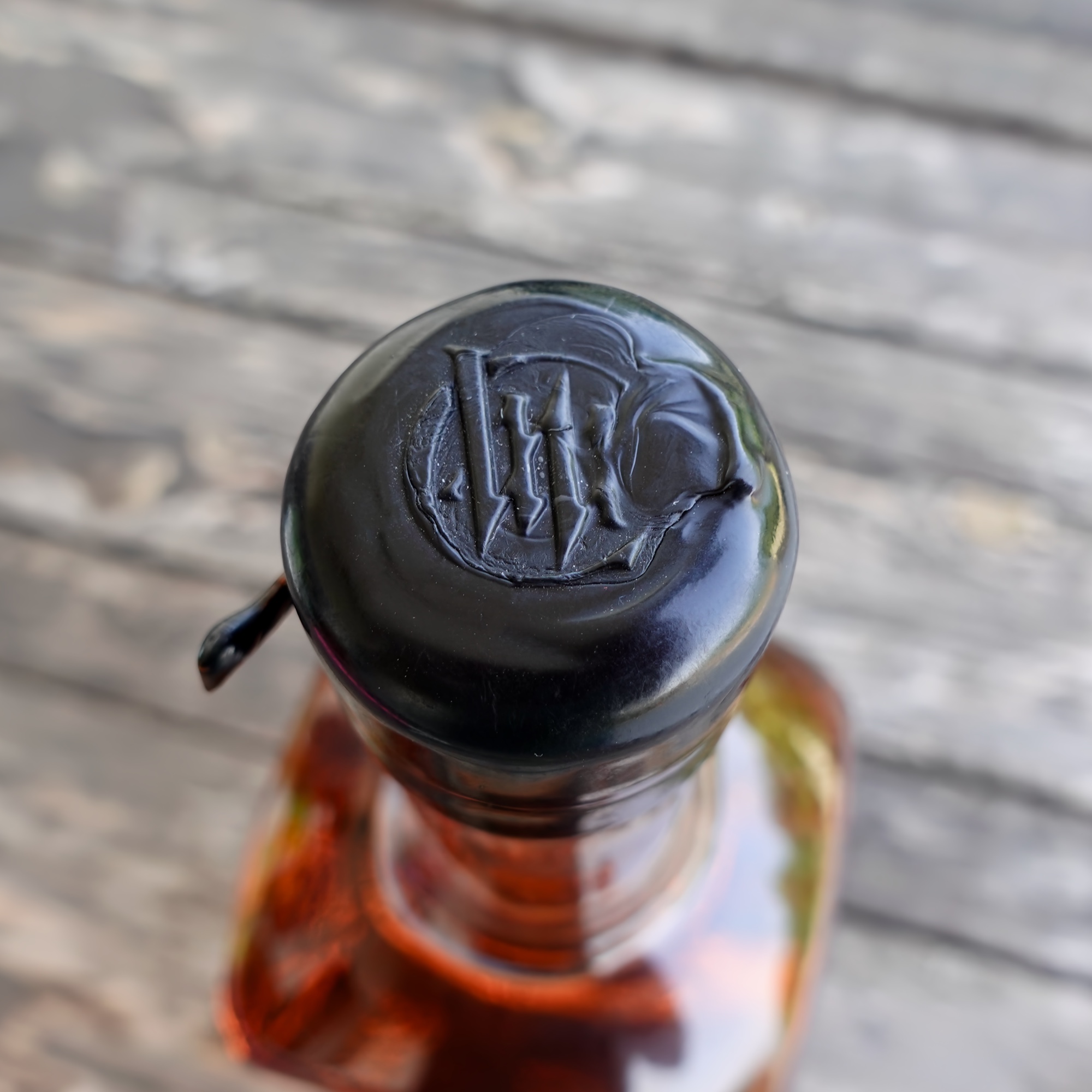
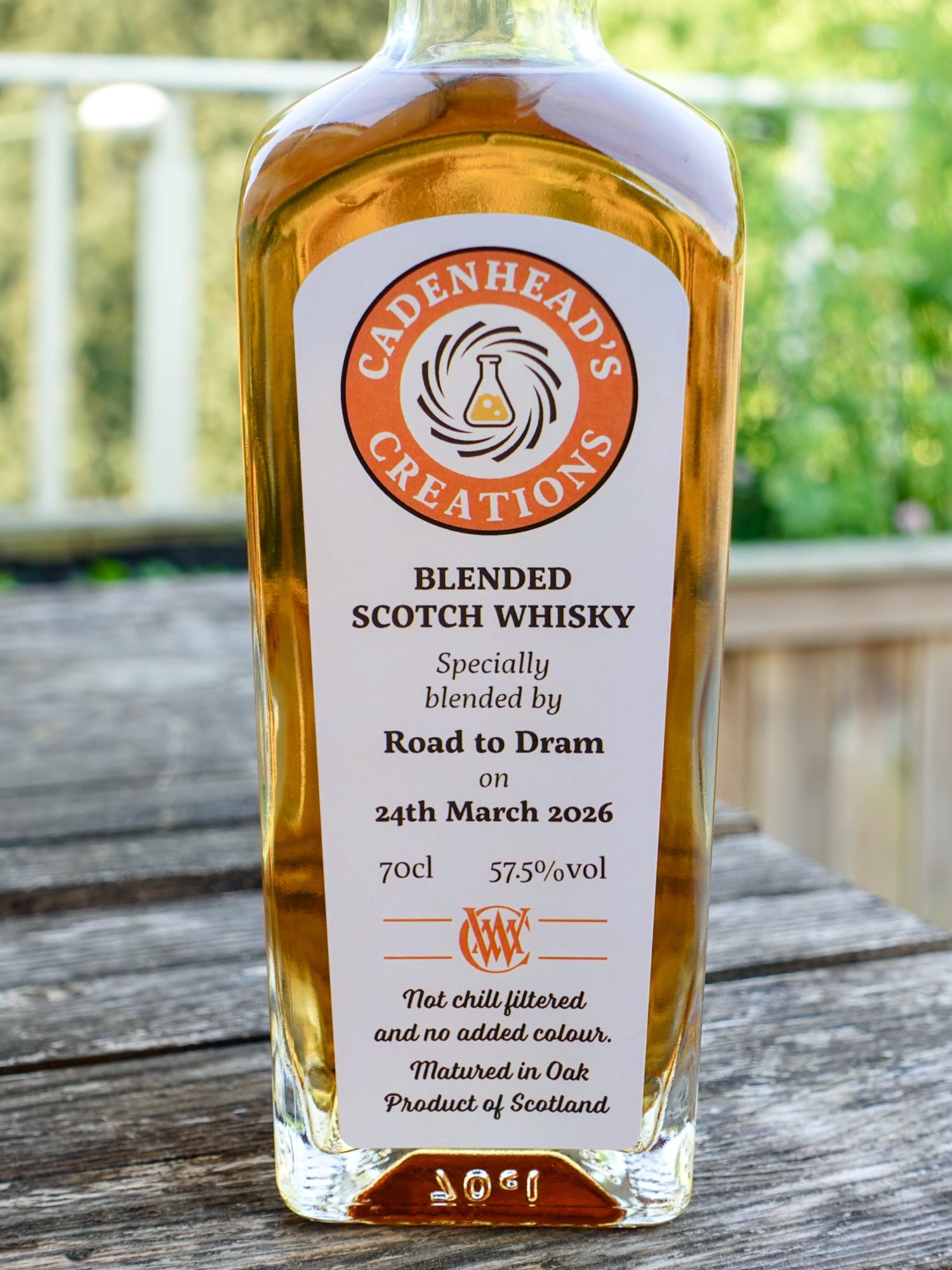
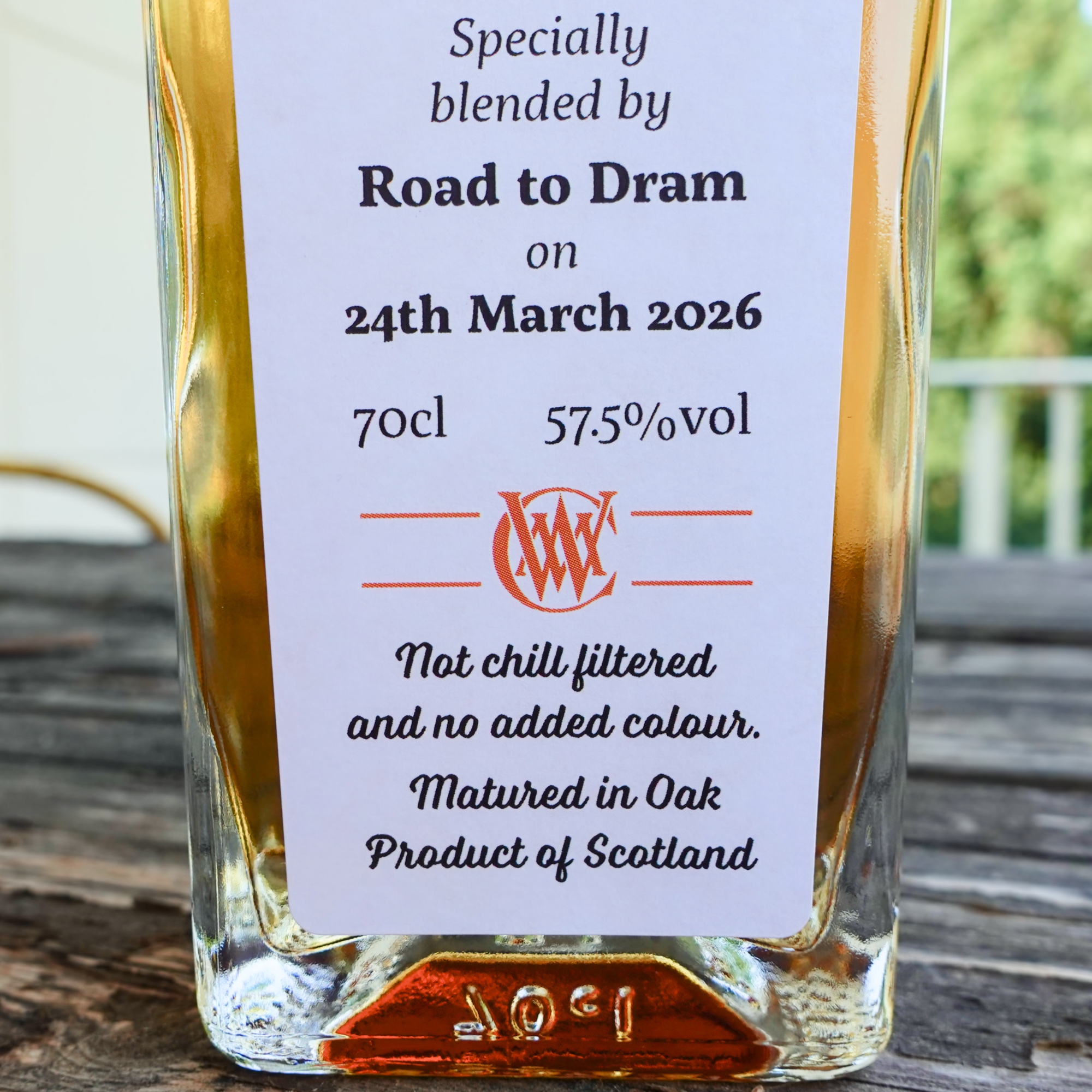
Cadenhead’s Creations Blended Malt, specially blended by Road to Dram – working title “A Summer Ramble”
Specs
Price paid: Included in the £100 price of the Cadenhead’s Blending Workshop experience
Bottled date: 24/3/2026
ABV: 57.5%
Natural colour: Yes
Non-chill filtered: Yes
Blend Components: 200 ml 21 yo Highland grain whisky, 200 ml 12 yo Speyside single malt, ex-Bourbon, 150 ml 10 yo Speyside single malt, ex-Port & 150 ml 12 yo Highland single malt ex-rum.
Tasting notes
Nose: Would I find the notes I picked again? I did, which surprised me. The backbone is fruity and sweet. I recognise the ex-Bourbon Speysider and some of the grain notes. The older grain also brings a touch of wax and citrus peel notes. The ex-rum and ex-Port components create a soft yet balancing counterpart. Floral and slightly grassy notes from the ex-rum Highlander and a touch of spice, cocoa and a hit of saline notes from the ex-Port.
Palate and Finish: The texture is lovely, rich, smooth, and frankly, the grain does not affect things at all. The high ABV is noticeable without being hot. Still fruity, sweet, estery and salty, but with riper notes. The finish is medium-long, fruity, sweet and slightly bitter and salty.
Some final thoughts
No score this time, as I am completely biased. How could I not be? I am more than happy with the result, even impressed by how it turned out vs what I thought this would taste like when I finished the Cadenhead’s Blending Workshop. Great? No. Good enough for a dram after a Summer Ramble? Absolutely.
If you haven’t tried it yet, have a go. Buy some pipettes, a couple of small bottles to store your experiments, and get playing with the whiskies you have in your collection. Will you make great whisky? Probably not. Will you learn how to see whisky in a different light? Likely.
If I gaze over my shoulder as I finish typing this, I don’t see a row of scores when I look at my bottle shelves. I see creations, choices, experiments. And a ton of respect for the people who do this job day in and day out… hopefully, for them, with a healthy dose of fun thrown in.
If you have enjoyed this content, please share a comment below and consider supporting the cost of this blog via the button below


