


The Kilkerran warehouse tasting stayed with me long after I wrapped up my Scotland trip. I admitted last week that, after the initial disappointment of a cask failing to meet my expectations, the experience felt like honesty, the kind that you only come across in single casks. I left the tasting asking myself whether an official bottling, blended, calibrated to reproduce a house style, could ever show that same transparency. But there was a second moment, a story inside the story, that left me wanting to put that theory to the test on one of my favourites from the early days of this blog, the Kilkerran 12.
The seed was planted while tasting the refill Bourbon and the first-fill Sherry back-to-back in the flight. The stylistic tension between the two hit hard. One, bright, elegant and spirit-forward. The other, rich, dirty, funky, and dark. Both fantastic single cask expressions. But could such opposed personalities, even if with a common core, ever coexist in a bottle? And would the answer change how I look at the Glengyle official range?
A new look at Kilkerran 12
Back home to Italy, life resumed its normal rhythm of work, family and friends. I took a few weeks off whisky to let my body recover after the incredibly exciting but intense week-long trip to Scotland. And yet, that conundrum between cask personalities and official bottlings stuck. I wanted to sit down with one of Kilkerran’s core releases and this new perspective in mind.
I could have picked the 16, to date one of only two 9/10 scores I have ever given. Instead, I immediately zoomed in on the Kilkerran 12. Among all the early bottles I truly enjoyed, it is the one that flipped the switch, transforming me from being intrigued by whisky to a self-defined geek. If I were ever going to test if core releases lacked that honesty, even to the point of diluting a distillery’s character, it had to be this one.
It also sparked something larger, a thread that will run through my posts in the coming months: the Revisited Series, a themed series of posts returning to some of my most-read pieces with a changed perspective. Any review is a snapshot — a moment in time for both what is being reviewed and the reviewer. As experience changes, so does what we think. Challenging what I first thought is just another exercise in honesty. This time, my own.
My original thoughts…
Looking back at my original review is, first of all, slightly embarrassing. I immediately see things I would do differently today as a blogger. Not as much as I feared, though. And that is oddly comforting. More than anything, I am happy that I can still see myself, at that point in my whisky journey, in what I wrote.
My focus back then was all around chasing flavour in core releases. I was moving from being an occasional drinker of mass-market malts like Glenfiddich 12 or Glenmorangie 10 at 40% or 43%, towards integrity-bottled expressions. I had found many bottles that I liked, but few had really lit a spark.
The Kilkerran delivered in spades on that count. It upped the ante of how much enjoyment I could get from sipping a dram of whisky. I eked the bottle out, going back to it less often than I wanted to make sure the enjoyment would last longer. So much so that today I am reviewing the same bottle I reviewed two years ago.
Nothing is wrong with what I thought two years ago. The focal point has shifted.
… and how experience reframes the perspective
Back then, I had not yet discovered the wonderfully varied world of independent bottlers nor really explored special editions and single-cask bottlings. My field of vision was narrow. Twenty-four months later, with a lot more whisky under my belt and two Kilkerran’s warehouse tastings, the question has changed.
It is no longer a question of whether this whisky delivers on taste. I know it does. Today, the question is whether this original bottling represents what Glengyle/Kilkerran can do at its best for a broad audience, given its production volume.
Can it retain at least some of the core personalities I tasted in those single casks while still being a reproducible “distillery style”? Kilkerran, like sister Springbank, embraces a certain batchiness; it’s part of the identity, and arguably it leaves the core releases less bound to a monolithic house style than is the case with the giants of the industry. The cask makeup is usually 70% ex-Bourbon, 30% ex-Sherry, a hint at which one of the personalities is dominant and which is underplayed. Push the sherry too far, and the maritime, tropical notes drown in treacle and tobacco; pull it back too hard to Bourbon, and the Sherry contribution turns dull. It is a narrow ledge to balance on. Time to see whether the team at Glengyle manage it.
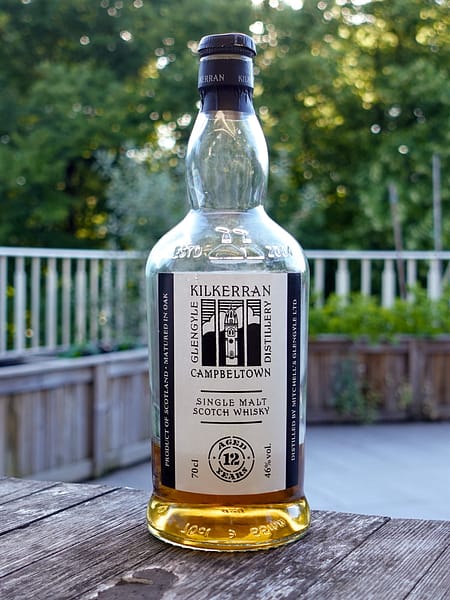
Kilkerran 12 year old
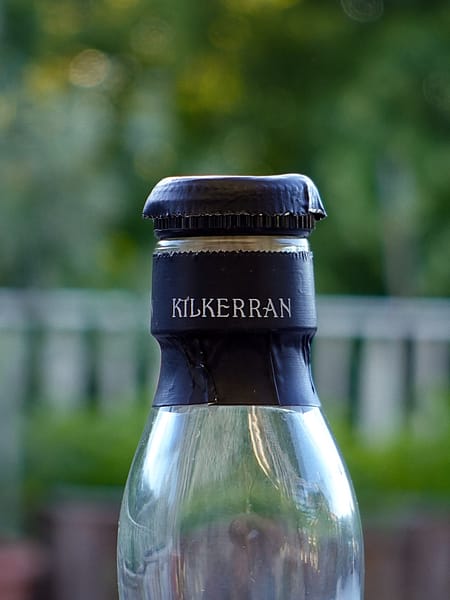
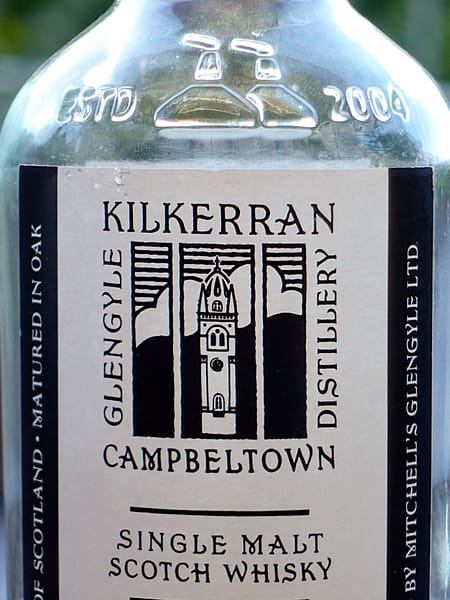
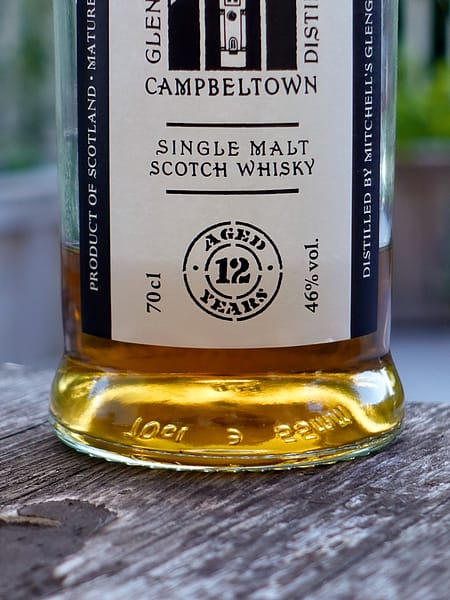
TL;DR: As core releases go, it offers just enough glimpses of the distillery’s many facets
Score: 8, something special
Specs
Price paid: 55 €
Lot/bottled date: 22/167 bottled 19/8/2022
ABV: 46%
Natural colour: Yes
Non-chill filtered: Yes
Casks Used: 70% ex-Bourbon, 30% ex-Sherry
Tasting Notes
Colour: This is the one thing I am sure has not changed from my original tasting. The rich, natural golden-amber colour with just a touch of old copper. The Sherry cask-aged spirit might be “only” 30%, but it already leaves a mark on the looks of this dram.
Nose: At the core, it is true to my original notes: maritime and fruity, mildly peated and funky, with a noticeable Sherry note of spices and dried fruit. The extra time in the bottle has softened it a bit, compared to my original review, making it rounder and a touch sweeter. What has changed are the individual notes I smell. Sea breeze and petrichor, then floral peat, just slightly woody. The fruity character develops in a mix of tropical and white orchard fruit: pear and apple, melon and pineapple. All accompanied by a hit of vanilla. The funk has a touch of composted fruit, grapefruit to be precise (I “blame” my Danish whisky mate Martin for sticking that note in my head -once you smell it you cannot unsmell it). The heavier sherry notes stay at the tail-end: dried fruit, some baking spice, a hint of rubber bands.
Taste & finish: The texture is rich for a 46% dram, maybe a touch below Springbank’s mouthfeel, the gold standard of “entry level” core release mouthfeel, but above many of its peers. The taste is where I see more differences compared to my original notes. Has my palate improved? Is it because of the slow oxidation in the bottle? Who knows? What I do know is that it opens on a gentle woody peat, hints of pipe tobacco, salted caramel, and grapefruit peel (less funky than on the nose, but still fermenting away). Then a light maritime iodine note, baking spices, malt and a touch of liquorice.
The finish is long, maritime, slightly peaty, funky and spicy.
Score*: 8
Scores are based on the scoring scale used by Dramface, slightly modified to allow half-points
New vs old score
Looking back at my original review, I see that I lacked a bit of courage. I was still unsure of my own scoring scale; I didn’t want to go overboard. So, split between a 7 and an 8, I hedged with a 7.5. I’ll not pretend the 7.5 was wrong. It was an honest snapshot of who I was then. But the number I’d give today, after hundreds of whiskies tasted, is an 8. Not a correction. A different moment translates into a different score.
Looking at what Kilkerran 12 is – an entry-level core release and the largest product by volume in Kilkerran’s stable- and setting aside today’s question of how fully it speaks for the distillery, it is fantastic. Full of character, fun to drink, but also able to keep you company for a couple of hours. A perfect bottle for anyone chasing flavour rather than inebriation in whisky. That part remains true.
Beyond the score
Here is where things get more complicated. Where that conundrum between elegant ex-bourbon and dirty and rich ex-Sherry character does not fully resolve. You can taste the back and forth between the two influences. But rather than being married as one, they come in succession. The palate opens on woody peat, salted caramel. Core spirit and Bourbon influence. Then the grapefruit funk surfaces, still fermenting away – the core of Kilkerran’s character. For a moment, the Sherry cask stops being polite and shows its dark side. Before it can run, the bourbon’s malt and the maritime spine pull it back into line. That is the character arc, start to finish, true to the 70/30 cask split.
The house style Kilkerran 12 reminds me of children on their best behaviour visiting relatives: showing their best, politest side, but letting a little of their brattiness slip out as soon as confidence grows. The bourbon is the dominant influence that defines the house style of the 12: younger and less elegant than that 2005 warehouse cask, but true to itself. The Sherry is toned down, not tamed.
As the distillery’s business card to whisky drinkers, the balance is arguably ideal, and few get it as right as Glengyle. That full honesty the single casks provide is relegated to a corner, but there is just enough of Kilkerran’s many facets to show up in the house style. Enough to leave the door open. A quiet invitation suggesting there might be more personality beyond the well-behaved house style. The decision to follow that hint is entirely in the taste buds of the beholder. I, for one, did and have no intention of stopping.
As usual, after writing my tasting notes, I always like to look at other opinions. Here are a few other reviews of the Kilkerran 12 I enjoyed and which I missed last time around:
If you have enjoyed this content, please share a comment below and consider supporting the cost of this blog via the button below