One of the peculiarities of independently bottled whiskies is the use, from time to time, of synonyms for certain distillery names. This can leave both novice drinkers and, occasionally, experts, guessing. Who really distilled the spirit in this bottle? So, for the third part of this 101 series on Independent Bottlers, I am looking at how to decode distillery synonyms.
This won’t be a complete list, rather an overview of some of the different styles of synonyms used by IBs. Take it as a primer into the four main categories of synonyms. If you ended up here while looking to decode a specific label, I suggest looking at the bottler’s online info first. Searching Whiskybase may also help, as that information will be shown if publicly available.
Distillate specific names
The first group of names I am going to tackle today is actually not secret at all. Nonetheless, it is one which can be confusing for many newcomers to Independent Bottlers’ distillery names, and could be perceived as secret names. This group is made up of whiskies named after a specific distillate style from a known distillery.
Stoisha and Moine re some of the best examples. Both are peated distillates produced by Bunnahabhain on Islay. Similarly, Ruadh Mhor is the name for peated Glen Turret.
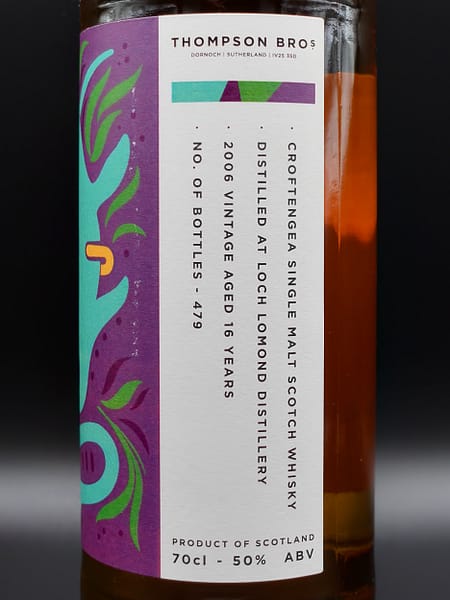
Loch Lomond Distillery, thanks to its choice of stills and malt types (which I briefly described in my Loch Lomond 12 review), produces several spirit types. The peated Croftengea and Inchfad and the fruity Inchmurrin are all occasionally bottled under their own names by IBs.
The Unnamed/Secret ones
The easiest names, but also the least transparent, are those that refer to a specific region but not a specific distillery. Names like Secret Speyside, A Highlands Distillery, Mystery Islay and so on.
Independent bottlers sometimes use these names because one condition for purchasing specific casks is that the distillery remains unnamed. Some distilleries view their name as a brand they alone should use. Having worked in marketing, I understand the self-centred reasoning behind this. However, it’s also deaf to the passion of whisky aficionados who are curious about the various aspects of their favourite brands.
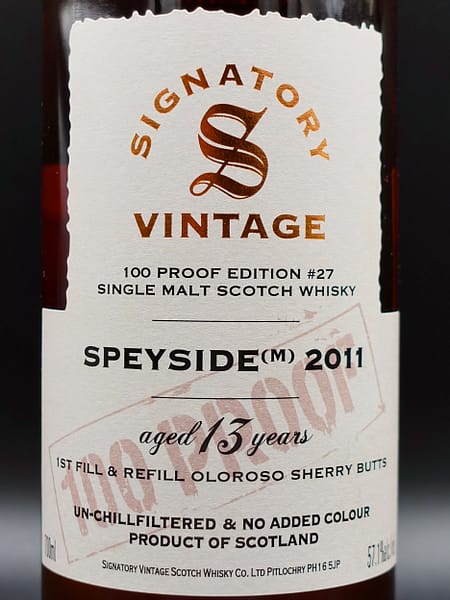
Be as it may, is there a way to understand what the distillery behind the mystery bottle is? There is, in some cases. Some IBs leave subtle hints in the images they use (a wildcat for Clynelish, for example), or world plays on their back labels. Sometimes, like in the label below, there is a hint that reduces the guesses – Speyside (M), tells us it is a Distillery from Speyside whose name starts with M, so one of four. But since Mannochmore and Miltonduff are usually labelled with their name, the choice becomes one between Mortlach or Macallan.
The wink, wink, not-so-secret ones
While the use of generic regional names is quite common in IBs when using the distillery name is not allowed, many IBs choose to use fantasy names. Some are used commonly and have almost developed into a brand of their own. Others are more spurred by fantasy or humorous, and are used by specific bottlers. Let’s start by looking at the first group.
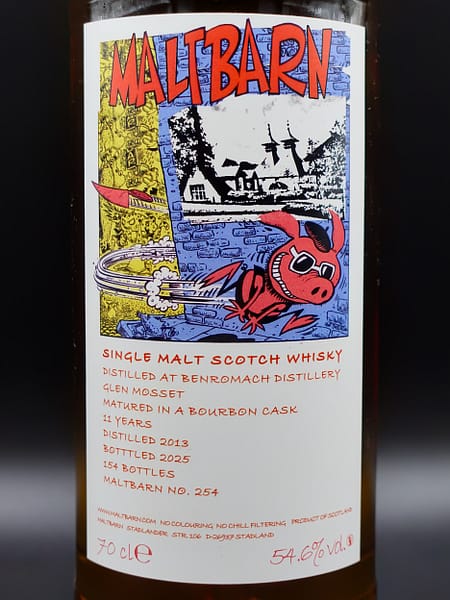
I have to preface the examples below by making clear that while none of these matches are official, most have been confirmed directly by Independent Bottlers I have had the chance to speak with… take that for what it’s worth (wink, wink).
Here are some of the best-known distillery synonyms used by Independent Bottlers:
| Kildalton | Ardbeg |
| Williamson | Laphroaig |
| Dalrymple | Ailsa Bay |
| Glen Mosset | Benromach |
| Lochindaal | Bruichladdich |
There is a subcategory of distillery synonyms which refers to teaspooned whiskies. Teaspoonning is the practice of adding a proverbial teaspoon (occasionally, literally) to the distillate of one distillery to turn it into a Blended Malt, and forcing a name change. The most famous teaspooned whisky by far is Westport, which is teaspooned Glenmorangie.
The fantasy/humorous names
At last, we come to where the fun is. Some Independent bottlers, rather than use serious synonyms, decide to go the fun route. Sometimes these names sound like the original distillery. There have been a few La Frog, Peaty Frog, etc, all turning Laphroaig’s name into a pun.
In some cases, the reference is to a clear association of a distillery with an animal, like Giraffes for Glenmorangie: if the name refers to the tall-necked African animal, you can be pretty sure of the distillate’s origin.
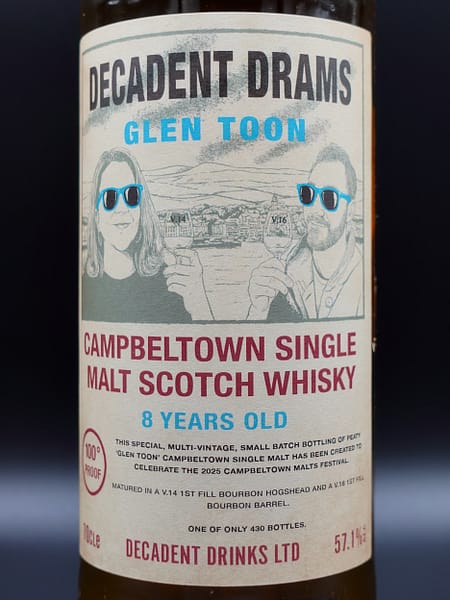
In some case, Like Decadent Drinks Glen Toon below, decoding the label needs a little local knowledge. The whisky is from Campbeltown, also known as the Wee Toon. And since there is only one Glen distillery in town (Glen Scotia), you quickly get which spirit is in the bottle.
In other cases, the name can be a pun at the expense of the original distillery. Decadent Drinks recently released a Glenlitigious, referring to the penchant of the distillery, which distilled the spirit for legal proceedings against other players in the industry. I will neither confirm or dey that Glenfarclas is the distillery in question.
I hope you found this introduction to decoding Independent Bottlers Distillery Synonyms useful, and stay tuned for next week’s post on why Independent Bottlers matter to whisky fans and the industry alike.
Independent Bottlers 101 Index
What is an Independent Bottler?
How to Read an Independent Bottler’s Label
Decoding Independent Bottlers’ Distillery Synonyms (This Post)
This week’s IB review
Thompson Brothers Linkwood 2010
Signatory Vintage 2012 Mannochmore
Interested in my take on a specific whisky style? Check the full Journey here and jump to the relevant Chapter.
If you have enjoyed this content, please share a comment below and consider supporting the cost of this blog via the button below