If you are a frequent visitor to Road to Dram, you may have noticed a small break in my posts over the past week. I have to “thank” the seasonal bugs which knocked me out for a few days for that. Nothing major, and I am back on track now. So today, I am continuing my 101 series on Independent Bottlers, looking at how their cask and ageing choices create a multiverse of whisky flavours parallel to that of official bottlings.
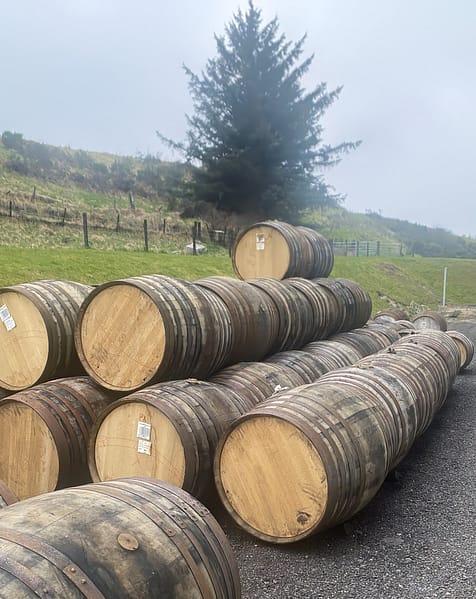
Distilleries’ official bottlings are usually geared towards consistency, trying to deliver flavour which varies minimally between lot to lot. This is achieved by blending different casks. Often more than one type of cask are combined, to achieve a balance of flavours representative of the distillery. Independent bottlers, on the other hand, need to strike a different balance. A balance between limited stock, often just a few casks or even a single one of what they want to bottle, the need to show the product at its best, and the freedom to experiment outside the limits set by a distillery’s house style. This translates to some unique IB versions of known whisky brands, a veritable alternative multiverse of whisky.
Spirit at its purest
One of the most unique expressions, which is often available only from Independent bottlers, is whisky aged uniquely in refill casks. Specifically, ex-Bourbon refill casks. This type of ageing is considered the best way to sample the natural character of a distillery’s spirit. While other casks, from first fill Bourbon to Sherry, leave a significant aromatic fingerprint on the whisky, refill casks do so in a much milder way, letting the character of the distillate shine.
It is a fascinating way to discover what lies behind the cask influence. And it is useful to create a mental map of some of the notes the distillate carries at its core. What I find fascinating is to try an IB refill cask aged version of a whisky usually aged in Sherry casks. Trying a refill-aged Highland Park, Mortlach, or GlenAllachie can be eye-opening to the nuances the spirit can deliver even when aged in strongly flavoured casks.
Cask riffs
The opposite side of the coin is the ability of Independent Bottlers when it comes to variety of cask choice. They can age or finish whiskies in a variety of casks not in use at the distillery. Creigellachie in red wine casks? Inchgower in Madeira? Fettercairn in Port? There is at least one (and possibly more) independent bottler who has released one of those. If there is a distillery you particularly like, it’s great to be able to try how different casks can work with the core distillate. Maybe it will confirm your appreciation for the choices the distillery has made. Or maybe it will make you enjoy a new facet of your favourite whisky.
Sister casks?
One of the arguably geekiest releases, and the geekiest cask choices you can find from Independent Bottlers is those of sister casks. What are those? Sister casks are usually two (sometimes a few more) casks of the same origin and seasoned with the same liquid (be it bourbon, Sherry, or other alcoholic beverages). These will have been filled at the same time and often aged in the same location. When the time for bottling comes, rather than vatting these together for a larger output, the bottler may decide to keep them as two individual bottlings.
Why do this? Because it allows whisky aficionados to realise how different the outcome of a process that is, for all intents and purposes, identical, can be. I have had the chance to try sister casks only twice. In both cases, it was almost shocking to realise how different the outcome could be. This gave me a much deeper appreciation of the work that master blenders go through. If even two almost identical casks can taste so different, they have their work cut out.
Ageing freedom
The last aspect I want to mention, when it comes to how Independent bottlers manage cask and ageing options, has to do with when to bottle. Distilleries’ own bottlings often carry a specific age statement. While this refers only to the youngest liquid used in the mix, it is usually also the most abundant component. Once a bottling of a certain age is established on the market, production and ageing will be geared to keeping things that way, as before, for consistency’s sake.
What if we want to try how a certain whisky might taste at a younger age statement? Or maybe a certain distillery’s range jumps from 10-year-old to 18-year-old with nothing in between, like Tobermory’s Ledaig, for example. How would it taste at 15 or 16 years of ageing? That’s where Independent Bottlers can fill the gap.
I hope this brief overview of how Independent Bottlers manage cask and ageing has given you another reason to look into the fantastical world of IBs. Stay tuned for more next week.
Independent Bottlers 101 Index
What is an Independent Bottler?
How to Read an Independent Bottler’s Label
Decoding Independent Bottlers’ Distillery Synonyms
Independent Bottlers’ Cask and Ageing Choices (this post)
This week’s IB review
Signatory Vintage 2012 Mannochmore
Thompson Bros. 2012 Craigellachie (coming soon)
Interested in my take on a specific whisky style? Check the full Journey here and jump to the relevant Chapter.
If you have enjoyed this content, please share a comment below and consider supporting the cost of this blog via the button below