For this last (at least for now) of this series looking at alternatives to popular whiskies, I am turning to peat. Today, I will suggest five alternatives to Ledaig 10. This one is a bit of an odd one out. If the previous three posts on alternatives to Glenfiddich 12, Aberlour 12 and Tamdhu 12 focused on whiskies that can be considered, if not fully beginner’s whiskies, at least entry-level ones. Ledaig 10 is a bit of a step up. Definitely more one for the geeks, budding or experienced, looking for a great approachable peated integrity whisky.
Considering how much traffic the other three whiskies in this series continue to receive, I was expecting some of the more beginner-targeted entry-level peated whiskies, like Laphroaig 10 or Caol Ila 12, to do the same. Instead, it came down to today’s Ledaig 10 and another whisky. One I will reveal later since it is in today’s alternatives list. It seems that when it comes to peat-lovers, the “beginners” deserve more respect than I gave them credit for.
Ledaig 10-year-old: The Isle of Mull’s smoky one
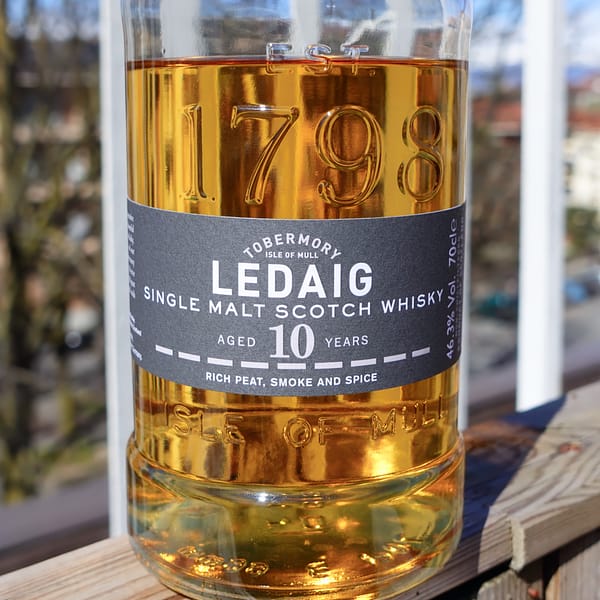
Ledaig 10 is an incredibly popular entry-level peated whisky. It is a staple in the Online Scotch Whisky Awards in the best value category. The fact that it is bottled as integrity whisky, at 46.3%, without caramel colour or chill filtration, certainly helps. But it is its personality that wins many over. So much so that this “usurper” from the Isle of Mull manages to beat some of its more famous Islay relatives.
I have a bit of a mixed relationship with this one. In my original review (link below), I was underwhelmed. Having had the chance to try other bottles, with a much more positive impression, I can only conclude that I got an unlucky batch. It does happen, after all, Single Malt is a batch product.
Check out my review of the Ledaig 10-year-old here.
Finding alternatives to Ledaig 10 is as potentially easy as it is hard in practice. Ledaig is made using barley malted using Islay peat, and therefore, it should have a similar profile to its Ileach siblings. It uses a mix of ex-Bourbon and ex-Sherry casks, which is not unique in peated whiskies. And yet it has a unique, lactic signature character that makes it stand out.
So, rather than trying the impossible task of finding something exactly similar, my five alternatives to Ledaig 10 today will focus on whiskies which can stand up to our starting bottle and offer something unique of their own. All this picking from bottles that I feel beginners will enjoy while trying to delve deeper into peated malts.
More of the same, with a twist: Ledaig Rioja Cask
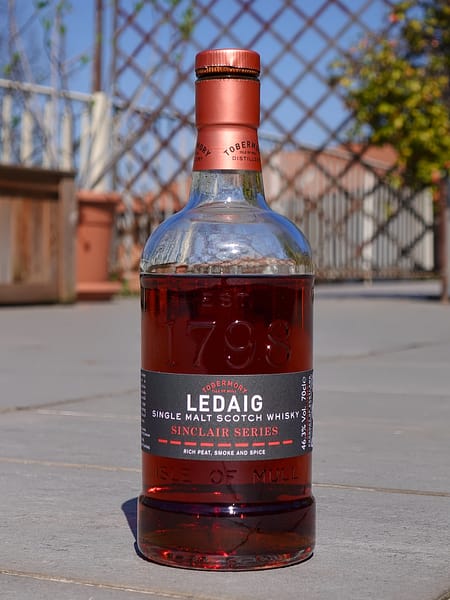
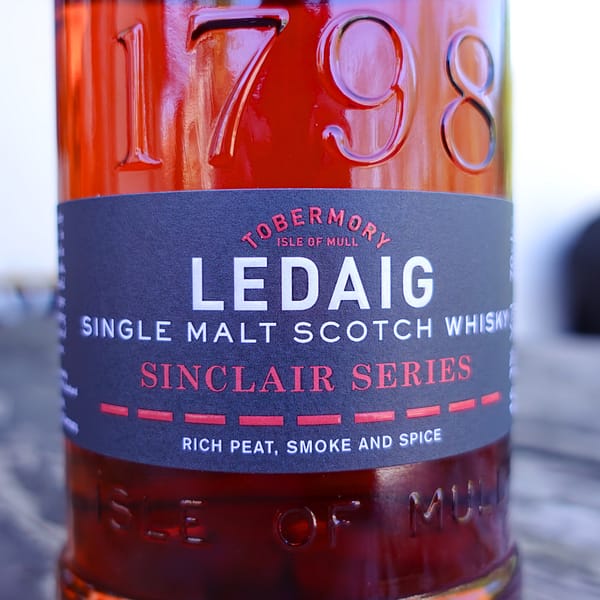
If you are looking for an alternative to a Ledaig… why not another Ledaig? My first of the five alternatives to the Ledaig 10 is the Sinclair Series Rioja. This could be a bit of a controversial one, as red wine cask finish for some whisky drinkers can be like a red rag to a bull. If you fall in that category, feel free to jump ahead. If not, this might be a great option. Quite a few of my whisky-drinking friends very much enjoy this one.
The red wine is definitely not shy. From the reddish hue in the bottle (all natural), to the red fruit and spice notes, this is a cask-forward one. And while some of that lactic Ledaig character may be lost, it is a very fun dram.
Check out my review of the Ledaig Sinclair Series Rioja here.
Islay Peat Primer: Elements of Islay Cask Edit
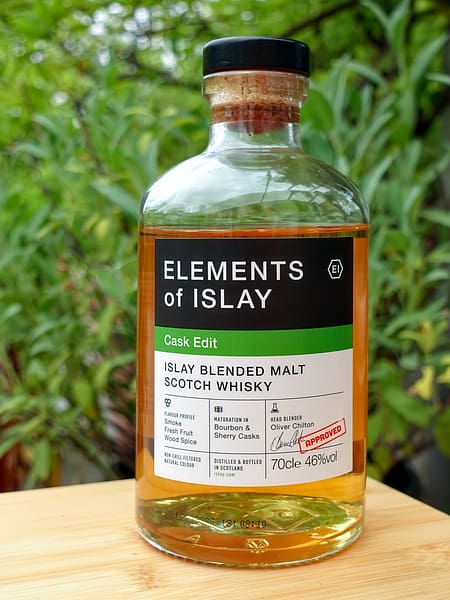
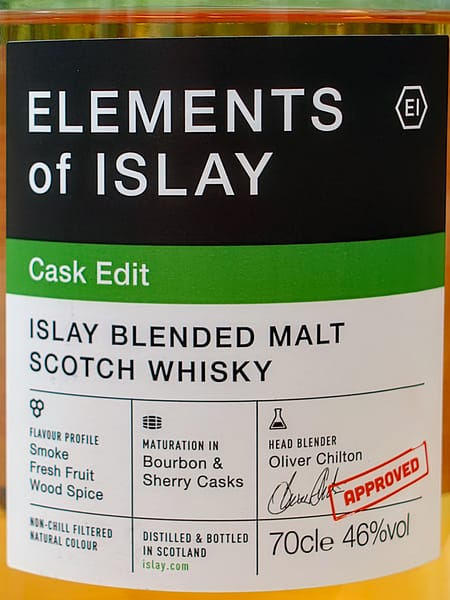
You may be looking for something more classical to explore as an alternative to Ledaig 10. Some traditional Islay peat, aged, like the Ledaig 10, in both ex-Bourbon and ex-Sherry casks. Maybe you are looking to try some of the Caol Ila and Laphroaig I mentioned before, in a way that goes beyond the official but diluted entry-level expressions. Well, don’t look further: the Elements of Islay Cask Edit offers all that.
A Blended Malt made for the majority of ex-Bourbon Caol Ila with some Laphroaig (aged in both Sherry and Bourbon), this is a very well-executed marriage of the two, having both the grassy, briney Caol Ila peat and the more aggressively medicinal Laphroaig signature. Compared to Ledaig, it is, unsurprisingly, somewhat more medicinal but also a bit fruitier. Initially, I liked this but wasn’t blown away. But the more time I spend with it, the more I appreciate how well executed this one is.
Check my original review of the Elements of Islay Cask Edit here
The Islay ambassador: Ardbeg 10-year-old
Once on Islay, you might want to go for a real classic expression from the island. An Islay ambassador. Today, there are a lot of options. And all valid alternatives to the Ledaig 10.
You might expect to see the Lagavulin 16 here, but it might be a bit of a pricey option for most. Even if it is coming back down to more acceptable prices, luckily. But the 8-year-old from the same distillery, better priced and at a higher ABV, is appreciated by many. Kilchoman, in turn, has some great entry-level peated whiskies – Machir Bay and Sanaig – respectively providing a more Bourbon and more Sherry-forward take on peated whiskies. And I must mention Ardnahoe, the Islay newcomer, and the impressive first releases we have seen from this distillery
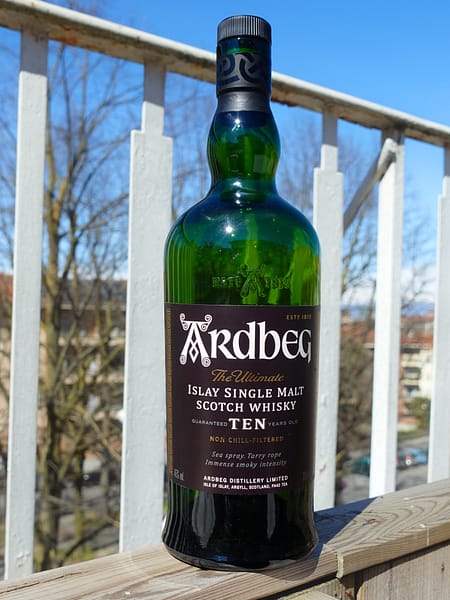
And yet, among all these, I keep getting back to Ardbeg 10. Peaty, maritime and peppery, this is one of the standards in peated whiskies. I have heard others complain that the quality slipped a bit a few years ago, but the most recent bottle I cracked remains as solid as before.
Check out my review of the Ardbeg 10-year-old here.
Peat, but different: Longrow NAS
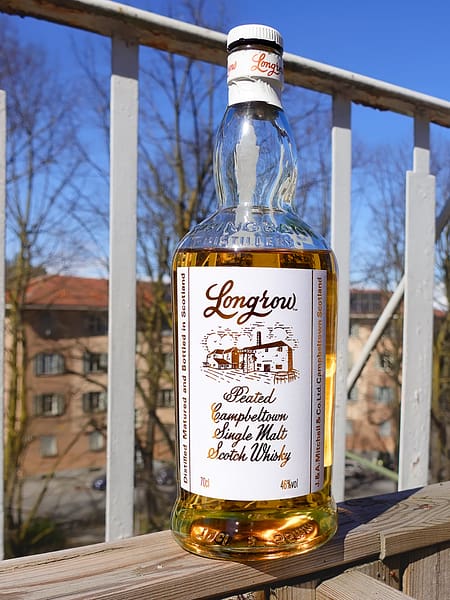
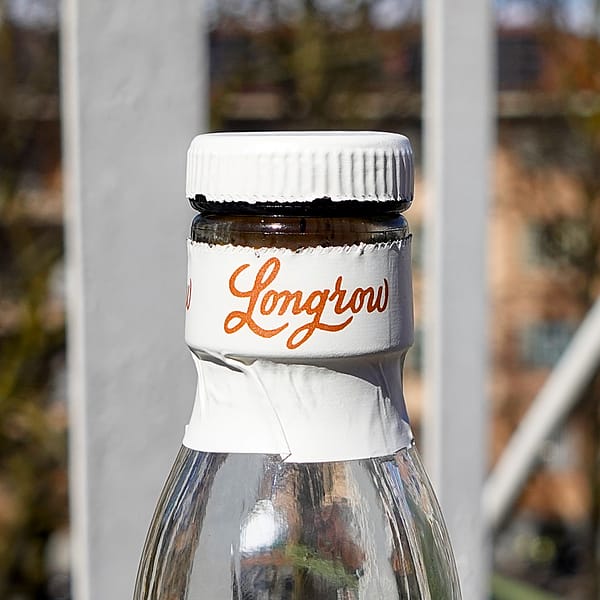
As usual, I do like to throw in a left-field suggestion. And for today’s alternatives to Ledaig 10, that oddball whisky is the Longrow NAS (Non Age Stated), made by Springbank. When I say oddball, it is more in reference to its similarity, or lack thereof, to Ledaig 10. In the glass, the two are recognisably different. But both are intriguing whiskies.
This Campbeltown staple is a heavily peated single malt produced by Springbank. Don’t let that name scare you. Longrow, in its entry NAS bottling, is the easiest Single Malt to find coming from Springbank. And it is a wild ride. The peat comes from the Highlands rather than Islay, so you can expect more vegetal notes. And being a Springbank whisky, there is plenty of funk and maritime notes, besides a rich fruity core.
This is a bit of a mood dram for me. Sometimes I love it, other times I feel it is a bit youthful and slightly rustic. But it is never boring and definitely worth trying out.
Check my review of the Longerow NAS here.
My top pick: Port Charlotte 10-year-old
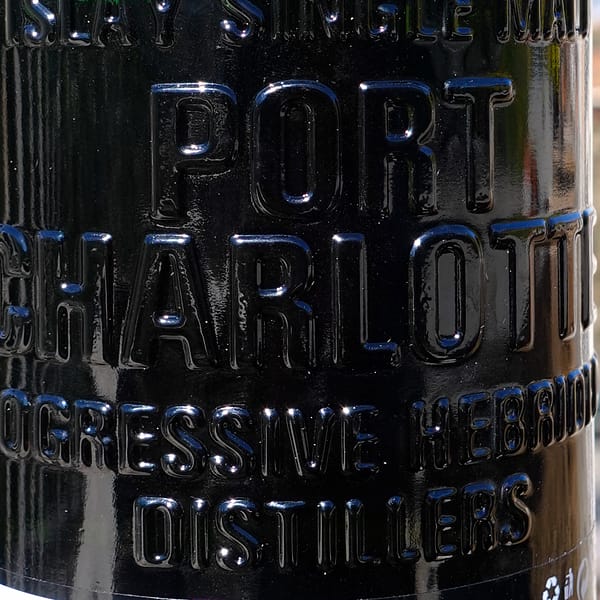
And finally, we get to the one whisky which has been head-to-head with the Ledaig 10 for the past 12 months in popularity on Road to Dram. The Port Charlotte 10-year-old. And, coincidentally, one of my favourites when it comes to entry-level peated whiskies.
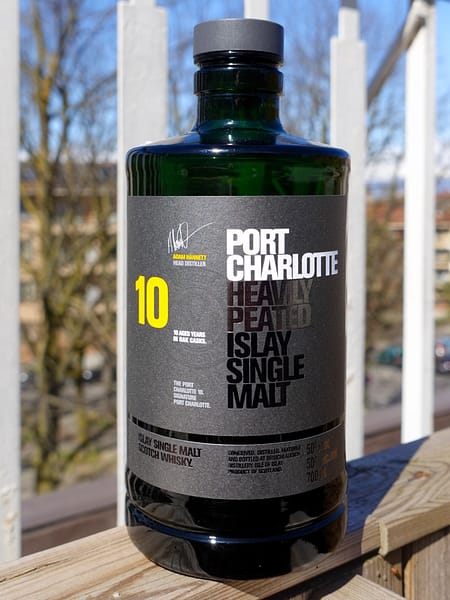
The Port Charlotte 10, or PC10 as it is often referred to, is an interesting Islay single malt. It is made with malt peated using Highland, rather than Islay peat. And while this does give a slightly more herbal note, it still retains some phenolic edge. It is bottled without extra colour or chill filtration at 50% ABV. So if you are just starting to explore whisky, it may be worth trying both neat and with a drop of water to reduce the heat.
It is also partially aged in second-fill wine casks, which, besides providing some light wine influence, adds a lot of extra complexity. And, finally, there is also some milky creaminess to the mix. Out of all the alternatives to Ledaig 10 in this list, this is the only one that comes close to the lactic accent of Ledaig. And all of that with layers and layers of aromas and flavours… I guess you can tell I like this one, don’t you?
Check my review of the Port Charlotte 10-year-old here.
Wrapping things up
Ledaig 10 is a popular take on peated whisky and rightfully so. It is also one of those whiskies with a unique character, which is hard to replicate. So today, for my five alternatives to Ledaig 10, I didn’t try to look for similar bottles. I would have failed. Instead, I picked some of the great entry-level choices in the peated category as a way to tickle your curiosity, if you are just approaching peated whisky. And if you are not, maybe there are others I missed. Let me know in the comments: what whiskies would you have suggested?
See you soon, with something different.
Interested in my take on a specific whisky style? Check the full Journey here and jump to the relevant Chapter.
If you have enjoyed this content, please share a comment below and consider supporting the cost of this blog via the button below
I’ve enjoyed this series.
I would have included compass box “the peat monster”, possibly because I have not tried the elements of Islay. The PC10 and Longrow are solid drams and Ardbeg 10 is Ardbeg 10 (which is a good thing).
BTW: I am noticing that the options for quality drams is expanding on shelves at big box stores in Australia in recent years. Admittedly off a very, very low base. I’m not sure what is driving this but I’m not convinced it’s because demand suddenly increased.
Cheers
Thank you, John, happy to hear you enjoyed the series and great to hear about the expanding options in Australia. Good to see the market shifting to quality drams.
The Peat Monster almost made the list: I thought long before deciding if I wanted to include it or the EoI, but ultimately decided to pick the latter because it manages to carry the character of the two distilleries used in the blend, Laphroaig and Caol Ila, in a cohesive way. Having said that, I do enjoy Peat Monster too.